


Broadlands Data Center: What Nearby Homeowners Should Know About the CyrusOne Project


If you live in Broadlands, Aldie, Ashburn or elsewhere in this part of Loudoun County, data centers probably don't feel like an abstract issue anymore.
They're increasingly part of our landscape—and part of the conversation about growth, infrastructure and what it means to live and own a home in Loudoun County.
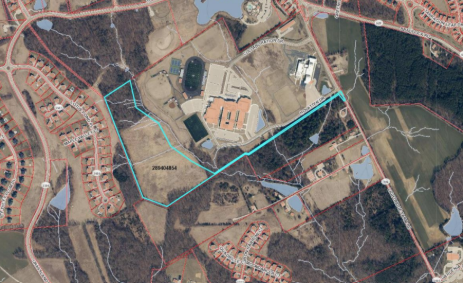
One project drawing renewed attention is the proposed Broadlands data center from CyrusOne, planned for approximately 50 acres near Broadlands Boulevard and Belmont Ridge Road. A petition opposing the project is circulating among residents, raising concerns about its proximity to neighborhoods and potential impacts ranging from noise and power infrastructure to energy and water use.
At almost the same time, the National Association of REALTORS® released its 2026 Data Center Impact Report, examining what data-center development may mean for residential and commercial real estate markets across the country.
The findings are more complicated than either “data centers hurt home values” or “data centers are good for housing.”
And for Loudoun homeowners, that's worth unpacking.

What Is the Proposed Broadlands Data Center?
The Broadlands data center project, identified by Loudoun County as Broadlands CyrusOne, STPL-2023-0041, calls for approximately 1 million square feet of data center development on about 50 acres.
The property sits between Belmont Ridge Road, Broadlands Boulevard, Education Court and the Dulles Greenway.
This isn't a brand-new proposal.
CyrusOne purchased the property in 2023 after plans for a large residential development on the site were withdrawn. At that time, the property's office-park zoning allowed data centers by right. That meant a data center could be developed there without the public hearing and Board of Supervisors approval that residents might expect for a major land-use proposal.
That distinction matters because Loudoun County has since changed its rules.
In 2025, the Board of Supervisors eliminated by-right data center development in several zoning districts and began requiring a special exception for new projects in those areas. Certain projects already underway, however, were able to continue under the previous rules.
The CyrusOne Broadlands project is one of those earlier by-right developments.
Why Are Some Broadlands Residents Objecting?
A petition opposing the CyrusOne project has begun circulating among residents.
Organizers argue that a facility of this scale is inappropriate so close to established residential communities. Concerns cited include electricity and water demand, backup generators, noise, air quality, power infrastructure and the visual impact of a large data-center campus.
Some of those concerns predate the petition.
When the property was sold to CyrusOne in 2023, then-Broad Run District Supervisor Sylvia Glass specifically identified the question of how electricity would be brought to the property as an issue because of its proximity to nearby homes and businesses.
County updates have also indicated that officials have worked with CyrusOne and the Broadlands HOA on landscaping and architectural treatments intended to help the development better fit its surroundings.
That doesn't settle the debate.
But it helps explain why this particular project is attracting attention. This isn't simply a data center tucked inside a distant industrial area. It's a very large development proposed in an area where people already live, drive, dine, attend school and spend time.
What Does the NAR Data Center Study Tell Us?
The debate over data centers isn't unique to Loudoun County.
The National Association of REALTORS® recently released its 2026 Data Center Impact Report, examining how data-center development is intersecting with residential and commercial real estate markets across the country.
One of the clearest takeaways is that there is no single data-center effect that applies equally to every community.
Real estate professionals surveyed by NAR reported differing experiences in markets with data-center development, while concerns raised by clients extended beyond real estate itself. Energy costs were cited by 61% of respondents and water use by 56%.
The report also found that residential electricity rates increased more between 2020 and 2024 in counties with large concentrations of data centers than in counties without them. NAR cautions, however, that those findings show an association—not proof that data centers caused the difference.
That distinction is especially important in Northern Virginia, where data centers are concentrated in communities that already have their own distinct economic, housing and growth patterns.
For homeowners, the report reinforces something that's particularly relevant here in Loudoun: the impact of data-center development is highly dependent on the community, the location and the individual project.
Why the Data Center Debate Matters So Much in Loudoun County
There may be no place in the country where this conversation is more relevant than Loudoun.
As of March 2026, Loudoun County reported approximately 233 existing data-center buildings, representing about 56.5 million square feet either built or in various stages of construction.
Data centers also play an enormous role in the county's finances.
Loudoun reports that data centers generated approximately $1.2 billion in real and personal property tax revenue in fiscal year 2026—about 39% of the county's overall budget.
That's significant.
At the same time, Loudoun County acknowledges that rapid data-center development has raised concerns involving energy infrastructure, noise, water, air quality, aesthetics, land values and compatibility with surrounding communities.
Both things can be true.
Data centers can be economically important to Loudoun County while residents can reasonably question whether a particular site is appropriate for a particular facility.
And that's one reason the debate surrounding the Broadlands project deserves more nuance than simply being “for” or “against” data centers.
What Happens Next With the Broadlands Data Center?
This is where the situation can become confusing.
Because the CyrusOne Broadlands project is proceeding under Loudoun's earlier by-right rules, this particular project does not go through the same public special-exception process that a new data-center proposal would face today.
The county's May 2026 project update continued to describe Broadlands CyrusOne as a by-right development that did not require approval by the Board of Supervisors.
That means residents shouldn't assume the circulating petition will automatically result in a Planning Commission hearing or a Board of Supervisors vote on whether CyrusOne can build the project.
However, Loudoun County is simultaneously working on its broader Data Center Standards and Locations Phase 2 initiative.
That effort is examining issues including data-center noise, utility substations, building height, onsite power generation, energy storage and where future facilities should be located.
And there's a timely opportunity for Loudoun residents who want to participate in that broader discussion.
The county has scheduled public open houses from 6:00 to 8:30 p.m. on September 28 at Broad Run High School in Ashburn and September 30 at Douglass Community Center in Leesburg. Planning Commission and Board of Supervisors public hearings on the proposed Phase 2 changes are currently anticipated in 2027.
What Should Broadlands and Nearby Homeowners Know?
I wouldn't tell a homeowner that a nearby data center will automatically lower their property value.
The research doesn't support making that claim.
I also wouldn't dismiss concerns about proximity simply because Loudoun's overall housing market has remained strong.
Instead, I think the questions buyers increasingly may ask are much more specific:
How close is it? Can I see it? Can I hear it? What power infrastructure comes with it? What's between the facility and the house? And how does it affect the experience of living in this particular neighborhood?
Those are different questions from simply asking whether a home is located in a county or ZIP code with data centers.
And they're exactly why I believe good local real estate advice has to extend beyond bedrooms, bathrooms and comparable sales.
Where we build, what's being proposed around our neighborhoods, how our infrastructure is changing and what buyers care about are all part of the story of homeownership.
I don't just pay attention to houses. I pay attention to what can affect living here.
I'll continue following the Broadlands CyrusOne project and Loudoun County's evolving data-center rules as both move forward.


Comments